Showing posts with label G321 Thriller Research. Show all posts

Sunday, 4 March 2012

How is the Femme Fatatle represented in "Inglourious Basterds"

How is the Femme Fatatle represented in 
"Inglourious Basterds" (2009)
(Independent research into the Thriller Genre)


"Inglourious Basterds" (2009) is directed by Quentin Tarantino. Tarantino has established one of the characters, Shosanna Dreyfus from his anti-Nazi feature film "Inglourious Basterds" (2009) as a 'Femme-Fatale'. The definition of a 'Femme-Fatale' is:
 1. A woman of great seductive charm who leads men into compromising or dangerous situations.

2. An alluring, mysterious woman.
Source: http://www.thefreedictionary.com/femme+fatale
'Femme-Fatatles' often meet a dramatic end within cinema, which was often found in classic Film-Noir titles. The possible reason for this explanation is that the directors and produces of these films wanted to send a message to women of that era. If women acted as the women characters found in their films - seductive, glamorous, and other such characteristics, then they would also meet the same dramatic and an un-glamorous end.


Please ignore the soundtrack used in these video(s) below. 

I could not find the correct clip, however, they have the correct elements/scenes from the film which I will be explaining in this post. I will be labeling these sections.

Please watch the video(s).


The character shown in the extract wears a bright red dress for costume. The colour red could possibly represent 'the Devil inside' of her.

This could represent how she leads men into dangerous situations. An example of this dangerous situation is how her attractiveness leads a young German soldier to his death.

An example of a sedctive, dangerous woman wearing a red dress who meets a dramatic end is from "Sin City" (2005).


Shosanna Dreyfus starts to put on makeup and red lipstick in a range of medium and extreme close ups (0:54). The makeup and lipstick are an aspect of the character's costume. The red lipstick and makeup could represent the character has a seductive charm about her. 


The character's hair colour is blond. Hair colour is also part of a character's costume. The possible reason behind using blond hair is that it is often used to represent a glamorous Femme-Fatatle within the genre. Blond hair suggests that the character is looking for a 'good time'.


Saturday, 25 February 2012

Intertextuality - Kill Bill Vol.2 and The Good, Bad, Ugly

Tarantino's use of Intertextuality in "Kill Bill Vol.2" with
"The Good, The Bad, and The Ugly"

Intertextuality:

Intertextuality in films is used to enhance a meaning and purpose within a clip and to communicate with the audience about possible upcoming events. The intertextual reference can reference almost anything from a media production such as film, T.V show, drama production, musicals, books and even comic books!


An intertextual reference could be the film itself aswell. For example, "Donnie Darko (2001)" was filmed within 28 days. The amount of time is important as it is an intertextual reference to what Frank - The Bunny Rabbit tells Donnie within the film. Frank tell's Donnie that he only has 28 days until a doomsday event.

An example of a 'comic book' reference can be names of character's. In comic books, the names of characters often use the same initials for their first and second names, a technique used by writers to make sure you remember a character. For example: "Donnie Darko", "Joanie James", and "Sean Smith". Resemble much likeness of the names "Peter Parker", "Black Blot" and "Madame Masque". By using the same initials the character(s) are being represented as superhero-like individuals.

Intertextual references can often include:

  • Similar scenes 
  • Representation of a character
  • Sound
  • Same soundtrack
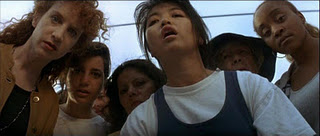
  • Iconic camera angles - such as Quinton Tarantino's "low angle car boot shots"
  • Plot
  • Dialogue
  • Costume
  • Location   
Quentin Tarantino:


Quentin Tarantino for example uses many intertextual references in his films. He frequently references to cult movies and television, such as the Spaghetti Western and part of the "The Dollar's Trilogy" - "The Good, The Bad, and The Ugly (1966)" which is directed by Sergio LeoneTarantino also refers to films which he has directed himself. He often includes a low angle shot which feature main characters looking down directly at the camera. These characters tend to be looking into a car boot or suitcase. This is Tarantino's iconic shot which he tries to use in all films he directs - the shot then communicates with the audience to tell them that the film is decided by Tarantino. This type of shot is his 'trademark'.

Examples of Tarantino's low angle shot:
Reservoir Dogs (1992)
Jackie Brown (1997)

Pulp Fiction (1994)
Kill Bill Vol.1 (2003)
Kill Bill Vol.1 (2003) 


Quentin Tarantino also tries to include a "Mexican Standoff" in each of this films. Thus referring to the ending of "The Good, The Bad, and The Ugly (1966)" when it was introduced into films. The "Mexican Standoff" is when three or more individuals engage in a confrontation where each participant holds power over an opponent, yet is at mercy with another opponent. Below are examples of Tarantino's reference:


Reservoir Dogs (1992)

True Romance (1993)

Pulp Fiction (1994)
 

Graveyard Scene in Kill Bill Vol.2:


Tarantino's most recognizable intertextual reference to Sergio Leone's films is the use of the soundtracks from "The Dollar's Trilogy". The first soundtrack is used in the opening sequence of the "Graveyard" scene in Kill Bill Vol.2 when The Bride confronts Bud. The soundtrack is called "A Fistful of Dollars" which is from the first film in the trilogy. It's very powerful and heroic. It represents The Bride's entrance being associated with the heroic-ness of "The Good" (Blondie), but then being kicked back down to a low hierarchy statues by Bud because he is seen towering above her while she is laying on the ground.

Tarantino uses a graveyard to establish the surrounding area as being lifeless, barren-like and desolate just like a desert. By doing this, the character The Bride is represented as if she has no chance of being rescued. She is at the mercy of a character called Bud (Bill's brother) whose archetype is represented as being "The Ugly". Just like how Tuco captures Blondie, and then forces him to walk across the desert - which is lifeless, barren and desloated, just like the graveyard.


.


The title of "The Good, The Bad, and The Uglyexplains the three main character-archetype of Sergio Leone's western:

"The Good" - Blondie. Blondie is the main hero of the film. In Kill Bill Vol.2, The Bride is the hero and thus being represented as "The Good". This archetype is the 'good guy'.

"The Bad" - Sentenza (aka "Angle Eyes"). Sentenza is the main villain of the film and emery to Blondie. In Kill Bill Vol.2Bill is represented as being "The Bad". He is emery to The Bride. This  archetype is the 'bad guy'.

"The Ugly" - Tuco. "The Ugly" is full of greed and is found between "The Good" and "The Bad". This is Bill's brother Bud 


The location of the graveyard in Kill Bill Vol.2 can be seen as an intertextual reference because the scene then cuts to a graveyard in the 'middle of nowhere' - a barren-like area. This could also be seen as an intertextual referecne to "Assassination of Jesse James by the Coward Robert Ford" (2007).

'Jesse James' is mainly set in fields and barren-like locations, much like "The Good, The Bad, and The Ugly" aswell as in the graveyard scene of "Kill Bill Vol.2". It is an intertextual reference because of the use of a descent-like area as a location.

The costume in 'Jesse James' is also very similar to the type of Western costume used in "The Good, The Bad, and The Ugly", perhaps it inspired the costume for 'Jesse James' and many other westerns.


The costume which The Bride wears during the graveyard scene in "Kill Bill Vol.2" is a slight intertextual reference to Blondies' costume. The close up shot of the 'cowboy' boots The Bride wears this is intertextual reference, which 'film-buffs' look out for within Tarantio's films. By wearing these boots, the reference is to portray the heroic statues of Blondie - the 'shoes which The Bride is trying to fill. The non-deigetic soundtrack is very heroic and powerful, this too also represents the states of Blondie.


Tarantion's second most recognizable intertextual reference to Sergio Leone's "The Dollar's Trilogy" is by using a second soundtrack from the trilogy. This non-deigetic soundtrack is called "Ecstasy of Gold", and is from the ending scene of "The Good, The Bad, and The Ugly" during the Mexican standoff. The soundtrack, "Ecstasy of Gold" is very musically rondo. The rondo within the soundtrack could possibly represent the constant battle between the three main characters during the Mexican standoff - the soundtrack will not change until one of them 'makes a move' on another.


In terms of relating the non-degetic soundtrack to the graveyard scene in "Kill Bill Vol.2", the battle is between The Bride and Bud as The Bride has no dialogue which is spoken towards Bud throughout the entire film. This resemples much likeness of the silence during the ending scene of "The Good, The Bad, and The Ugly". "Ecstasy of Gold" is often used within the Western genre as a tribute to "The Good, The Bad, and The Ugly". For example, Adam Oxsen's film is named after the soundtrack - "Esctasy of Gold" (2009) and includes very simliar scenes from "The Good, The Bad, and The Ugly".


Saturday, 4 February 2012

The Third Man (1949)

The Third Man (1949)

"Pulp novelist Holly Martins travels to shadowy, postwar Vienna, only to find himself investigating the mysterious death of an old friend, black-market opportunist Harry Lime." - IMDb

"The Third Man" is a British production which was released in 1949. Directed and produced by Carol Reed. It's a classic example of a black and white noir-film thriller because of the use of chiaroscuro lighting, unique silhouette arrangements and lastly by the use of very bold tilt shots throughout the film. The target audience of this film is likely to be middle aged males rather then females. The film's appeal to males is that of the mystery in the story as well as the main characters being males having anti-hero characteristics.


The opening to "The Third Man" consists of titles with an extreme close up of a musical interment. This musical instrument is called a Zither. The camera shows the Zither playing the official soundtrack/theme tune of the film. This scene lasts for around 2 minutes. These 2 minutes is for the audience to settle down and to get engaged with the film. The titles also show the actresses' and actor's roles. Nowadays, these titles/credits are usually shown at the end of the film. By having this very repetitive soundtrack, it builds up suspense for the audience.


The use of the Zither can be seen as a cultural signifier. It also represents the characteristic archetype of "Harry Lime" - one of the main characters. The use of the strings represents how Harry 'plays' with people, especially his friends. The soundtrack also creates an evoking feeling of dangerous intention and mystery, another characteristic of Harry Lime.  - If you have seen the film before, then this should make sense, if not, It'll be explained later on in this post

Close up of a pair of hands smuggling watches. The watches can represent the film's location as being corrupted and dangerous. This is because the shot shows the illegal acts of a black market within the mice-en-scene. This is then backed up by an appearance of a mysterious body floating in a river bank in the next scene. The body also represents corruption and the genre of the film. The ship is tilted which can suggest distress because the ship is not levelled properly in the water - it is sinking, much like the moral of the people. Lastly, the glass can represent Vienna as being fractured into broken sections - this is explained later in more detail about the film's historical setting.


The body is in complete darkness with no way of identifying who he or she is. This adds mystery and suspense to the scene. The body and ship are 'abandoned' and have been 'dumped' into the river. This tells the audience that the area is a dangerous place to be around and sets the atmosphere of the film's genre. 


The whole river bank looks very marshland-like because of the use of natural ambient lighting. I see this as an intertextual reference to "Essex Boys" (2000) when a male character beats up a man and leaves him beside the marshland to possibly die and 'float' away. The bodies are also both solid black silhouettes within the mise-en-scene.


The camera cuts to a handful of establishing shots of the film's historical setting and location - Vienna. These shots each differentiate between close ups and medium shots. One in particular is very important to establish the film's historical period and setting. This is the scene which the camera shows the flags and soldiers from the British, Russian, America (U.S) and French armies. This then tells the audience that there is tension within the city because of the battle between ownership, and that the film is historically set just before the beginning of The Cold War (approx. 1945-1991).


The film introduces a character called Holly Martins, who is looking for his friend Harry Lime, only to find out that Harry Lime has been killed. Holly's costume is like a detective-like suit/outfit, for example, the children's T.V. show Inspector Gadget. The long dark tweed coat and trilby hat has influenced many films, for example "Once Upon A Time In America" (1984). Because of this type of costume, it is seen as a generic convention within the thriller genre.
.

Holly walks under a ladder that is located outside Harry's apartment. Walking under a ladder is an old superstition of getting bad luck. The director Carol Reed uses this superstition of bad luck to tell the audience about possible events and possible future events. Another example of this representation of an object is the reflection of lights on a car window in "Essex Boys" that look like jail bars. This is to portray a future event which the characters could be going to jail.

Holly arrives at Harry's apartment only to find an old German man who speaks very little English. Carol Reed uses this technique of language to make the audience feel uncomfortable. This is done by using no sub-titles when the pair exchange dialogue to make the audience be in the same 'boat' as Holly. The camera angles between the character's dialogue are mostly tilted close ups which create a feel of disorientation and confusion - much like the pair's conversation. The high angle shots of looking down at Holly shows his vulnerability. Because of this, it then adds suspense and tension to wherever or not if Holly understands the old German man for the audience.


During the film, Holly becomes friends a character called Anna. Anna is represented as being very intriguing and subtle, much like the Mona Lisa portrait. Anna is also shown as being mysterious, puzzling and having clam body language towards the audience, again, much like the  Mona Lisa portrait.

Holly has been searching for his friend Harry Lime, suspecting that Harry wasn't killed at all. Holly's expectations then become very clear to him - Harry was playing a trick on everyone, just as if hes 'playing' with them. Much like the murder mystery "Cludo" board game. The appearance of Harry Lime is very cinematically famous. The tilted shot of the archway is very haunting, mysterious and very Gothic due to the use of chiaroscuro lighting and the diegectic sound of a cat's "meow" - Cats are often associated with witches, hence the Gothic appeal. 


Holly taunts the doorway, suspecting someone is there. The tone and words used in the dialogue: 


"Cat got your tongue?...C'mon out..........Come out, come out, whoever you are!" 


Reminds me very much of:

"Come out, come out, wherever you are!" (1:04)


From the film "Cape Fear" (1991). This can be see as an intertextual reference between the two films as both characters use similar dialogue in a similar situation - a man looking for another man.


Another intertextual reference was used in the BBC 1 production "Sherlock" (2010+) (series 2 ending). This is by the use of a vehicle. The car in The Third Man stops Holly Martins reaching Harry Lime. By the time Holly reaches the position where Harry was standing, Harry has mysteriously disappeared into the dark noir doorway as if by magic. The intertextual reference is by the use of a vehicle (or a 'mode of transport') that obscures a character's view and reaching their goal to aid and help the other character.